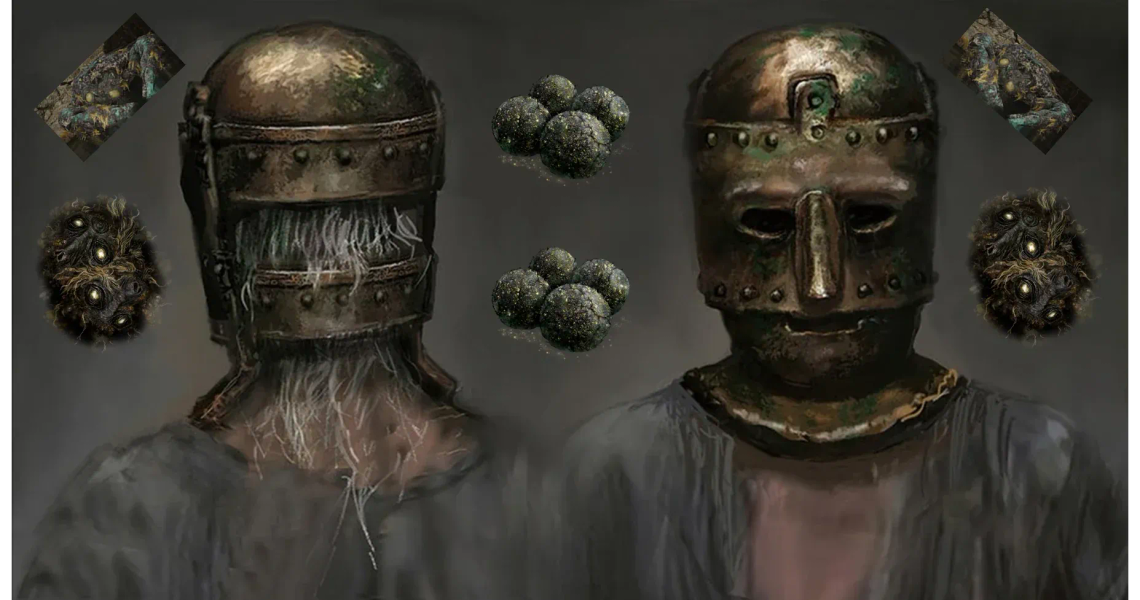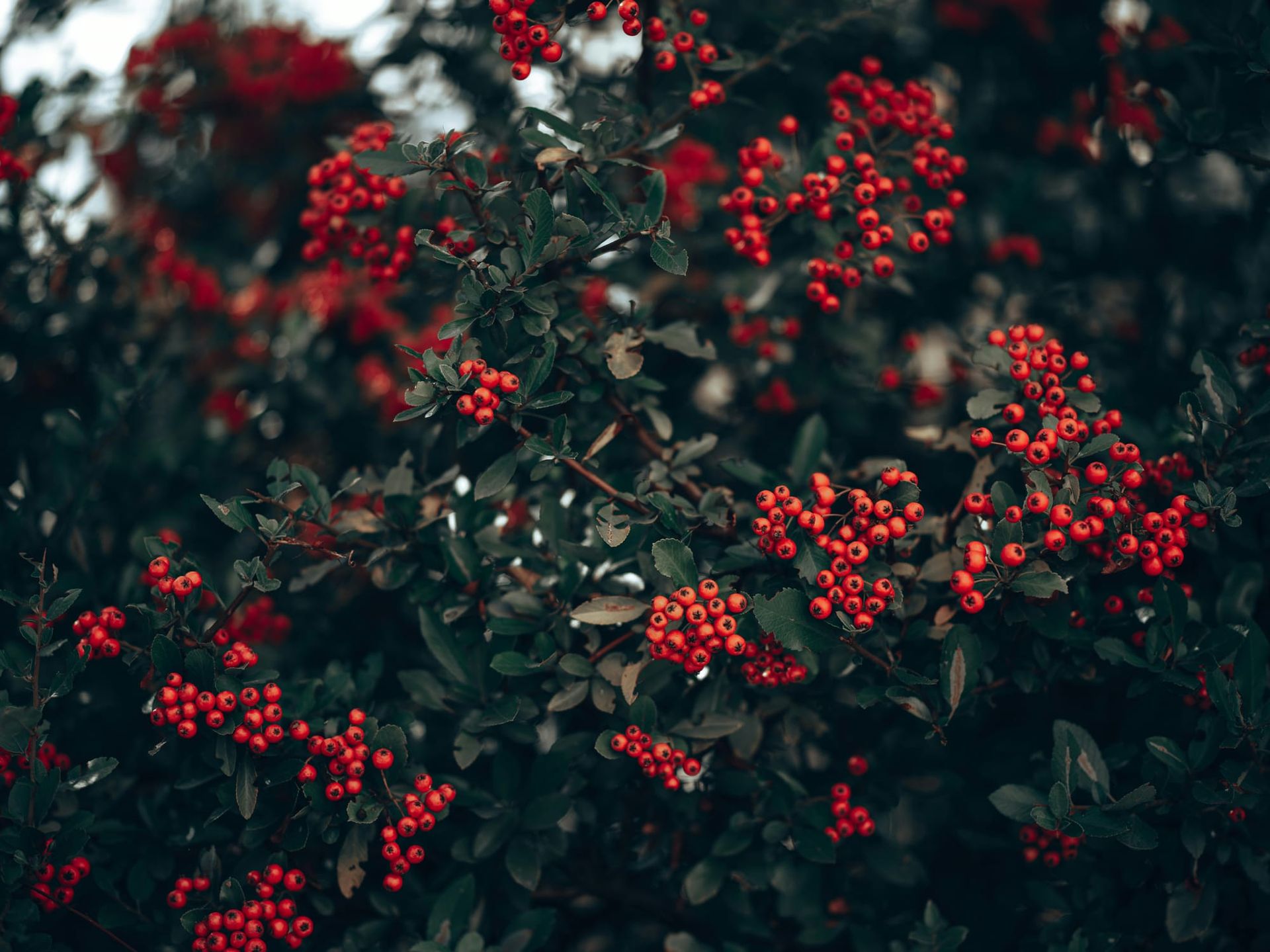
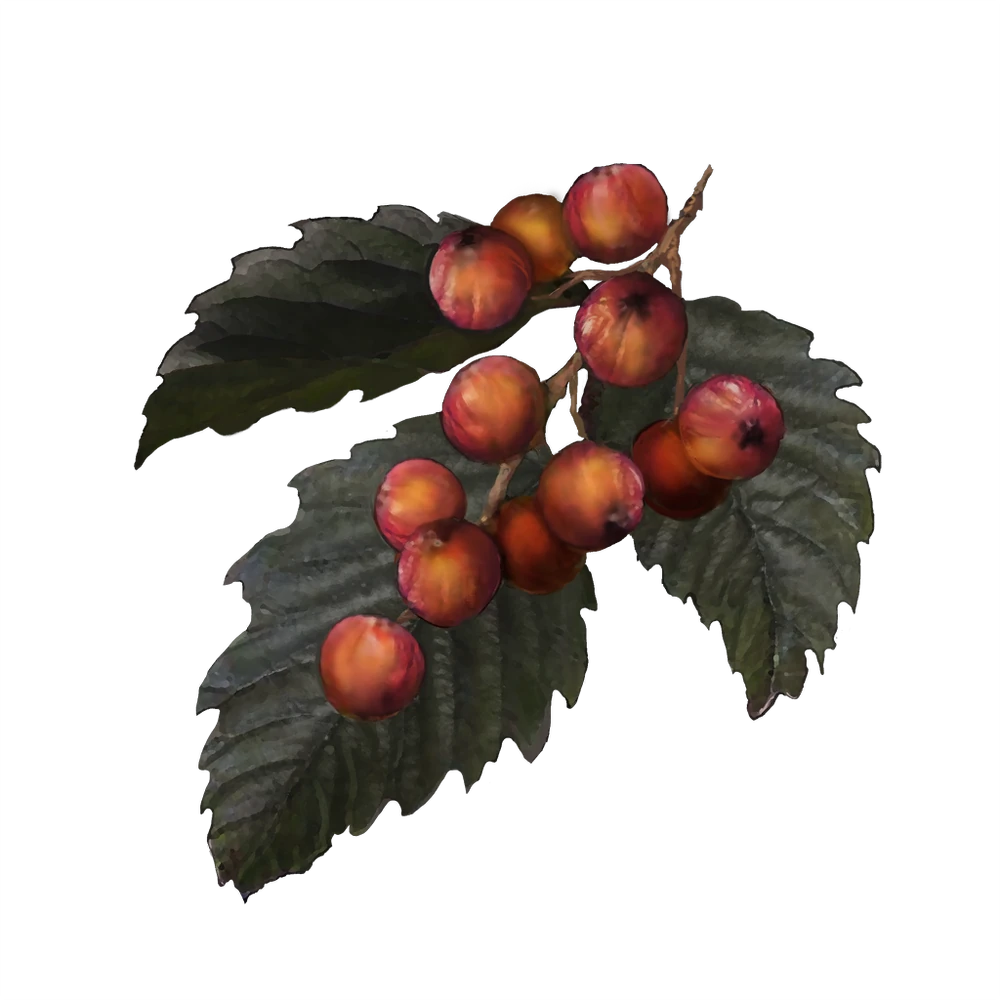
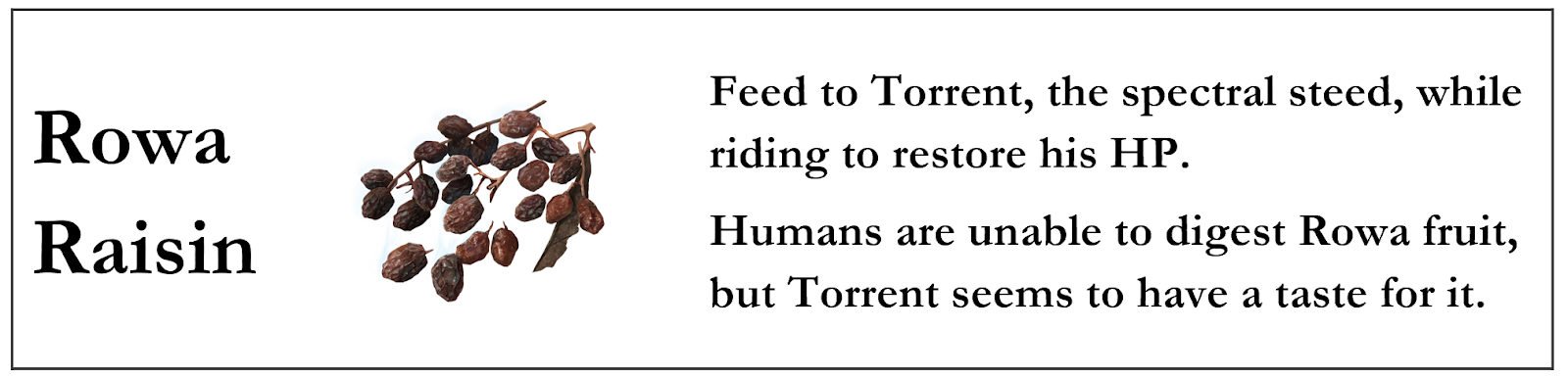
The Rowa Fruit is used in crafting a number of items, but it has its own inspiration - The Rowan Berry
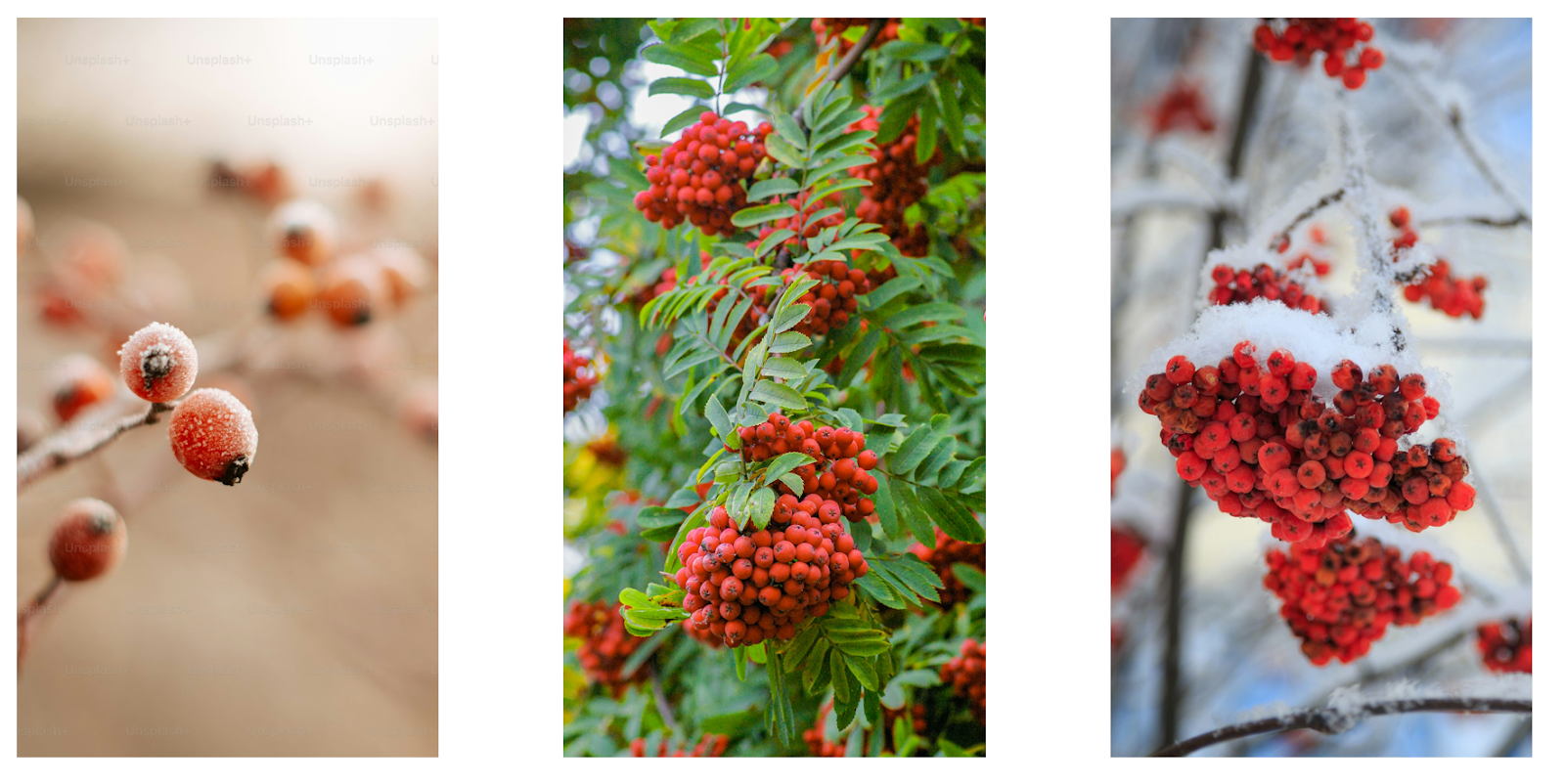
The rowan berry comes from the rowan tree (Sorbus Aucuparia). It flowers white in the spring and its berries can be harvested in the autumn. This tree has a rich history in Europe, where the wood and its fruit are associated with fae, witches, and spirits. It was used as a ward against evil. It was also frequently used in conjunction with livestock, giving us a nice connection with Torrent, the spirit steed.
Other names include: quickbeam, quickbane, witchwood, wicken tree, traveler’s tree, mountain ash, delight of the eye, royne tree, Thor’s helper
Mythic References
Celtic - Fae Tree of Spirits & Fortunes
The rowan is one of a few trees associated with the Tuatha Dé Danan, also known as the fae. To injure a rowan was to run the risk of offending them, so the trees were treated with respect and care. Some druids considered the rowan to be a portal tree, acting as a door between our world and that of the fae.
The druids also thought the rowan was gifted with powers against evil spirits and spells. The trees were thought to be useful in warding off hexes - human or otherwise. Twigs and branches could be sewn into clothing or hung on walls and windowsills, but full trees held the most power. Rowan trees were commonly planted near the doors of houses and churches. Graveyards often sprung up around rowans, rumored to keep the unquiet dead from leaving their graves.
The last power worth noting is that of dousing. While Y-shaped rowan rods could be used to find water, their specialty was finding metals.
Laidley Wood
The spells were vain
The hag returned
To the Queen in a sorrowful mood
Crying that witches have no power
Where there is Rowan tree wood.
Celtic - Bovine Protector
Another fun association is with livestock. Rowan crosses and red thread frequently adorned livestock and stables. Thread was made by dying it with the berries. It would often be tied to tales and halters, along with bells.
Old Celtic Saying
Rowan tree and red thread
Make the witches tine their speed
Celtic - ‘Ambrosia’ Berries protected by a Giant
Rowan feature in an old Celtic myth much like the drink of the gods does in Greek. This myth takes place in a forest lush with rowan trees. Their berries were plentiful and enlivening. One would make you drunk. Two would guarantee 100 years of life. Three would reset your age to 30.
The Forest of Dooros was protected by a Fomorian called Sharvan the Surly, (a one-eyed giant). A couple of fae on the run were hiding in this forest. They were allowed to hide here on the condition they did not touch the trees. After some time, the wife began to crave the berries. So one day the husband asks Sharvan if she may have one. The giant is super rude and says he wouldn’t offer her any even if she was dying. The husband takes issue with this, fights him, and takes over the forest, enraging some of the other local gods.
Much like Adam & Eve, these magic rowan berries act as a forbidden fruit.
Finnish
The Sky God’s Consort
Ukko, the Finnish god of thunder, was known to consort with a god called Rauni. This goddess was mysterious, but some think she was associated with the rowan trees based on linguistics.
excerpt from "The Kalevala"
In the yard there grows a Rowan.
Thou with reverent care should'st tend it.
Holy is the tree there growing.
Holy likewise are it's branches.
On it's boughs the leaves are holy.
And it's berries yet more holy.
Cultural References
British Isles
There are strong historical associations in the Scottish Highlands and rural areas of Scotland & Ireland
- The tree can grow at higher altitudes than any other, resulting in popularity in the Highlands. In these locations it becomes gnarled overtime
- Scottish Highlanders were once fond of necklaces made with rowan berries
- An old Scottish term for the cross-beam in the chimney is rantree, as it was commonly made of rowan
- In some areas Mayday was also called Rowan Tree Day. One custom in some places was to burn rowan for spiritual protection, similar to sage
It was also consumed by people, although it's not an ideal food
- Scotland, Wales, & Ireland were known to use the berries to flavor their spirits, ales, and meads
- Rowan berry jelly and juices are still used, but must be cooked down, as the raw berries are too acidic for us to digest
Rowan crosses were commonplace up until the 19th century, usually as amulets to protect against witchcraft. The normal version is two twigs placed over each others’ centers, tied together with red thread in the center similar to a god’s eye.
- At the Isle of Man, rowan crosses were created without the use of a knife to minimize damage done to the wood
- In Wales people wore rowan crosses and were buried with them. The trees were protect corpses and coffins. Bodies were temporarily placed under a Rowan trees as a blessing of sorts.
Scandinavia
- The etymology of the word Rowan may be based on the old norse name for tree - raun / rogn
- Rowan have a connection to Norse runes. Its wood was used for divine proscriptions and there was a specific rune tied to Rowans
- High rooted trees with branches growing from clefts of unreachable rock are known as flying rowan
Color Theory
Red
- Rowa fruit are bright red, indicating they are related to health and vitality (of Torrent in many cases)
Blue
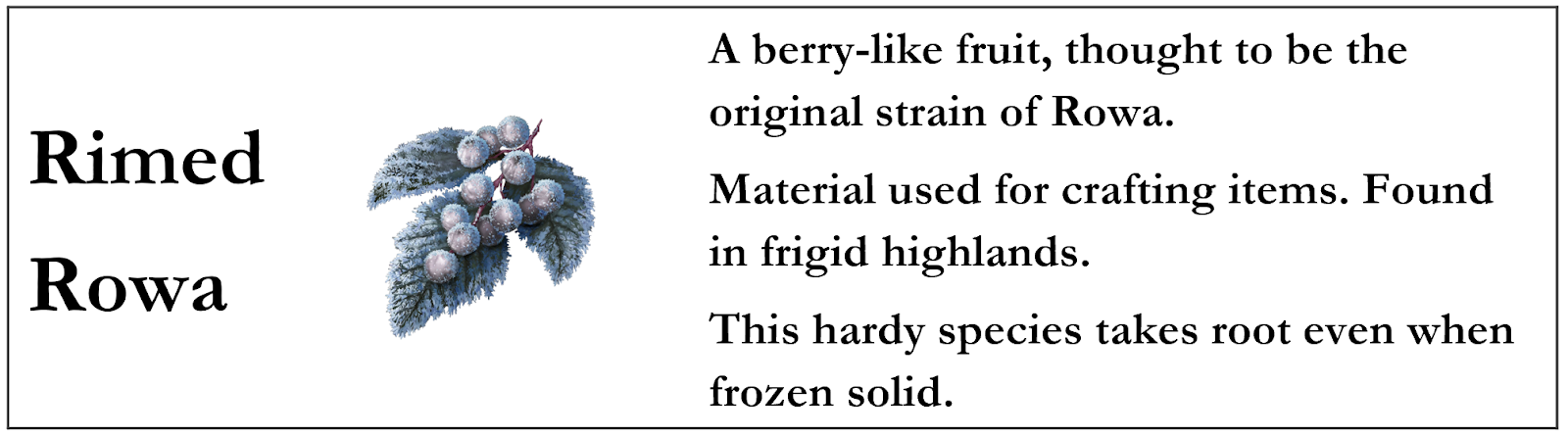
- Not all rowa fruit are red however. We find an icy blue version in the Mountaintops of the Giants. The prevalence of spirit animals in this region and Torrent’s fondness for rowa raisins as a spirit steed give us multiple allusions to the spirit world.
Sources:
The Silver Bough, Volume 1. F. Marian McNeill.
https://web.prm.ox.ac.uk/england/englishness-loop-of-rowan-tree.html
https://www.somegoodideas.co.uk/articles/the-folklore-and-mythology-of-the-rowan-tree
https://www.angelfire.com/ks/larrycarter/Rowan/Tree.html
https://sacred-texts.com/neu/celt/cml/cml18.htm#page_219
https://en.wikipedia.org/wiki/Ask_and_Embla
https://www.britannica.com/topic/dowsing
https://hagothehills.wordpress.com/tag/rowan-tree-and-red-thread/
KiteTales - Miquella and the mystery of St. Trina - Elden Ring